

Potential Exposure To Airborne Fibers
Asbestos Flooring Removal
The use of Non-Friable Vinyl Asbestos Tiling (VAT) is considered a health hazard due to potential exposure to airborne asbestos fibers used in the flooring adhesive. For full transparency on the established minimum work-practice requirements, download our contractor guide below.
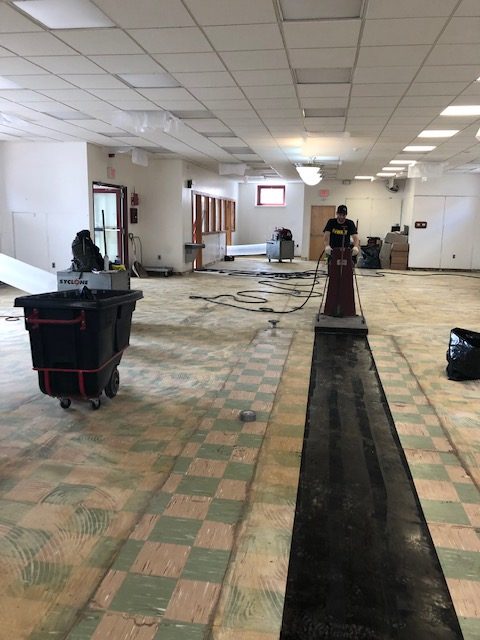
The use of Resilient Floor Covering Institute (RFCI) recommended work practices has become widely accepted as the method of choice for the removal of asbestos floor tile and mastic. Our removal process is performed using infrared heat machines that allow each tile to be heated and removed intact and non-friable.
Give us a call or contact us today to get started!
Have A Question? We Are Here To Help!
Asbestos Removal FAQs
Asbestos floor tile, often referred to as non-friable vinyl asbestos tile (VAT), was commonly used in older buildings. While the tiles themselves are relatively stable, the adhesive underneath can contain asbestos that becomes hazardous if disturbed. During removal or renovation, airborne fibers can be released, which is why proper asbestos removal is essential for protecting indoor air quality and occupant health.
We follow industry-accepted methods for asbestos floor tile removal, including the use of specialized infrared heat equipment. This process gently heats each tile so it can be lifted intact, keeping it non-friable and significantly reducing the risk of releasing harmful asbestos fibers into the air.
In addition to vinyl asbestos tiles, older flooring systems may include asbestos in the mastic or adhesive used to secure the tiles. Identifying these materials before removal is a key step in ensuring a safe and compliant process.
